If you're planning a trip to New Orleans, there's one place you absolutely can't miss: Jackson Square. This historic landmark sits at the very center of the French Quarter, where centuries of history, culture, and creativity converge into one unforgettable experience. Whether you're drawn to the stunning architecture, the vibrant local artists, or the rich stories etched into every corner, Jackson Square offers something special for every visitor to the city.
TLDR:
- Jackson Square is the historic heart of the French Quarter in New Orleans, featuring St. Louis Cathedral, the Pontalba Buildings, and the iconic Andrew Jackson statue
- The square is open daily and surrounded by must-see attractions, including Café du Monde, the Louisiana State Museum, and the Moon Walk along the Mississippi River
- Local artists, street performers, and festivals like French Quarter Fest make this a living, breathing center of New Orleans culture
- Book your stay at Roami's spacious vacation rentals in the French Quarter to experience Jackson Square like a local
Ready to Experience Jackson Square?
Don't just visit Jackson Square—live steps away from it. Roami's design-forward vacation rentals put you in the heart of the action, with spacious accommodations perfect for groups and families. Wake up in the French Quarter, stroll to the square for your morning coffee, and return to your own private retreat after a day of exploration. Book your New Orleans adventure today and discover why staying with Roami beats any hotel experience.
What Makes Jackson Square the Heart of the French Quarter
Jackson Square isn't just another park—it's the soul of New Orleans. This city block has witnessed Spanish rule, American expansion, and countless moments that shaped Louisiana into what it is today. When you stand in the square, you're standing where generals planned battles, where artists found inspiration, and where locals and visitors have gathered for over two centuries.
A Historic Landmark with Spanish Roots
Long before it became Jackson Square, this site was known as Place d'Armes, a Spanish military plaza built in the 1720s. The original design followed classic Spanish colonial patterns, with a central parade ground surrounded by important civic buildings. The Spanish influence runs deep here—from the architecture to the layout, you can still see traces of New Orleans' Spanish period throughout the square.
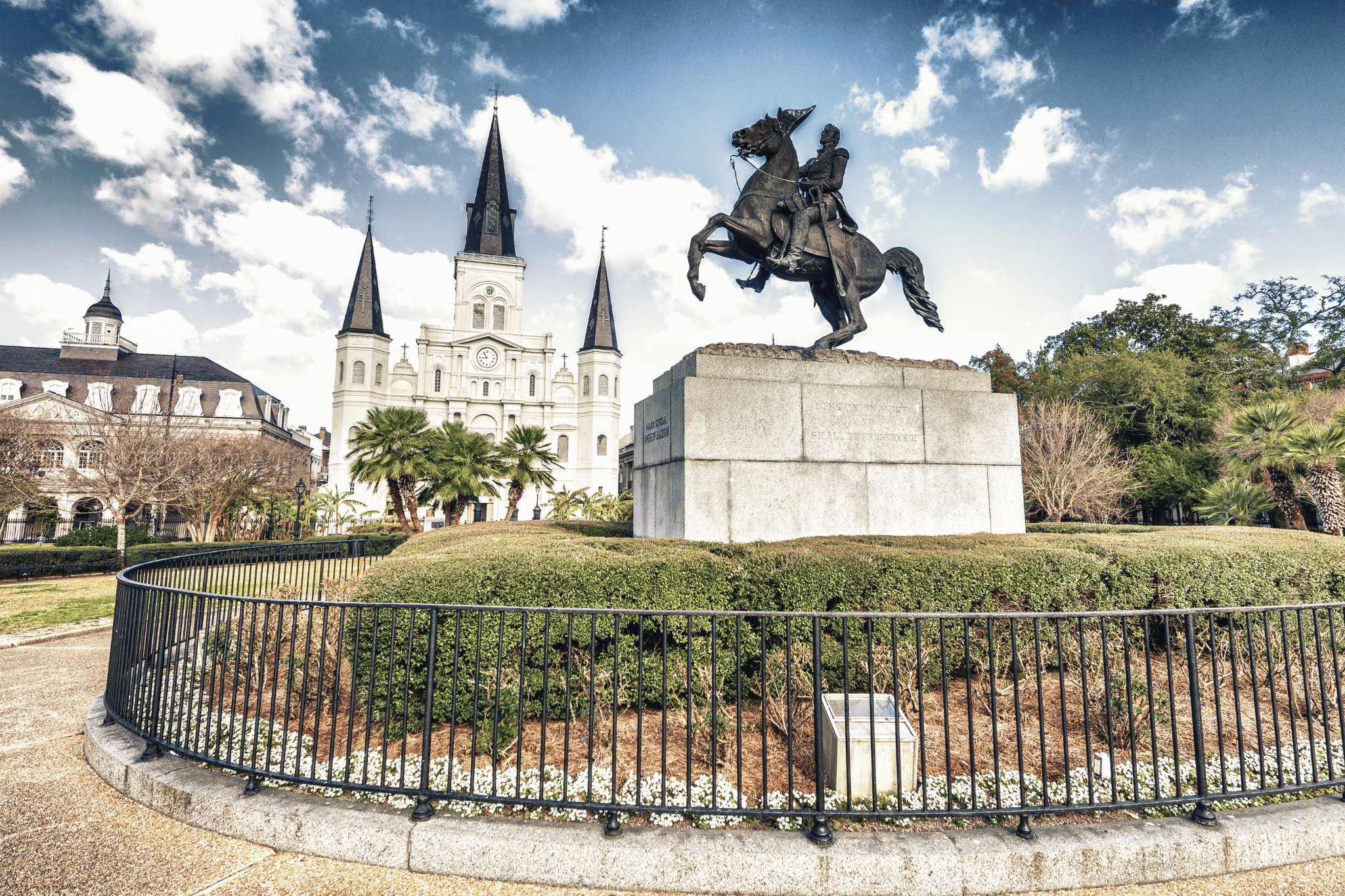
The transformation from military parade ground to public park happened gradually. After the Battle of New Orleans in 1815, the square took on new significance. It was eventually renamed Jackson Square in 1851 to honor General Andrew Jackson, who led American forces to victory against the British. That famous statue of President Andrew Jackson on horseback was erected in the center, becoming one of the most photographed monuments in the New Orleans area.
The improved landscaping came later, with Parisian-style landscaping that gave the square its elegant, European feel. The site was built and rebuilt over the years, with major construction happening in phases from January through October of various periods, transforming it from a dusty plaza into the beautiful park we see today.
The Iconic St. Louis Cathedral
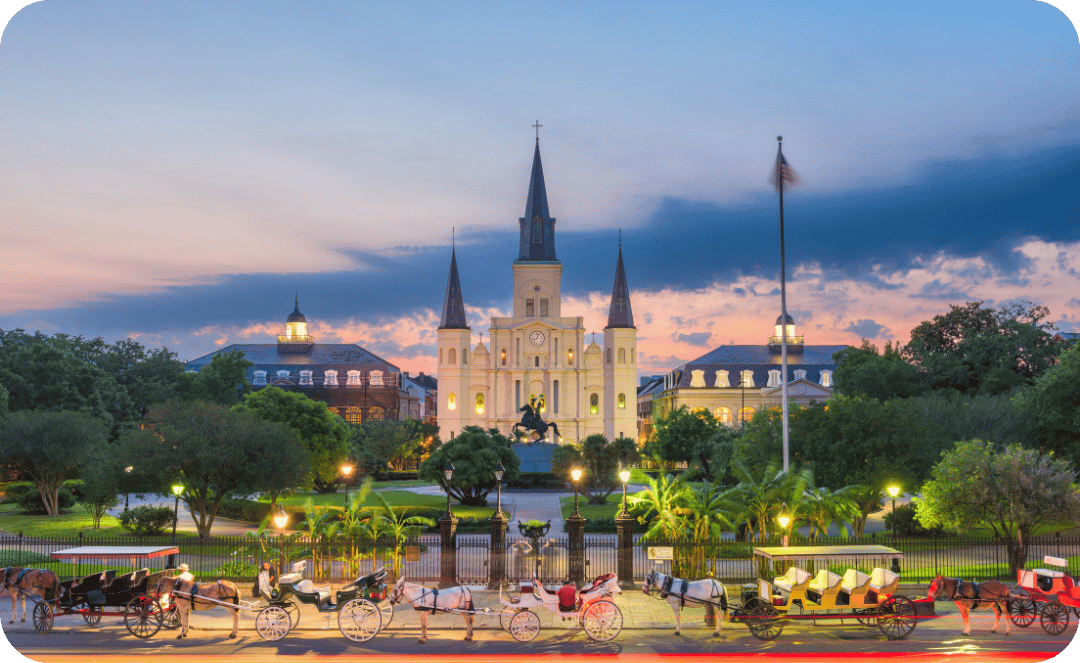
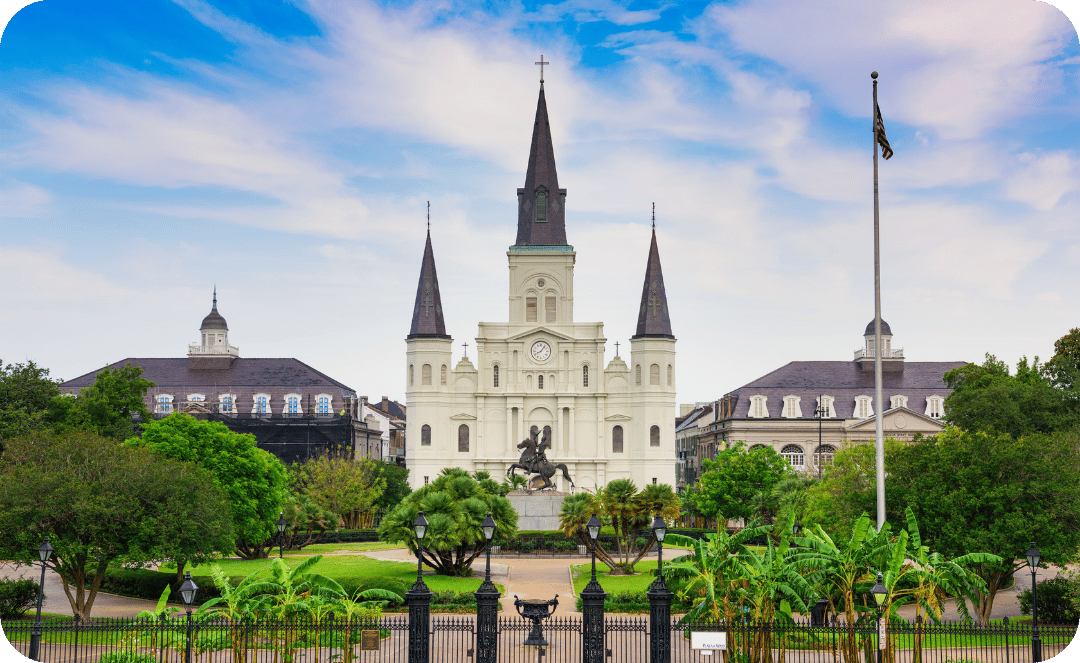
Dominating the upriver side of Jackson Square stands St. Louis Cathedral, officially the Cathedral-Basilica of Saint Louis King of France. This stunning white cathedral with its three distinctive spires is the oldest continuously active Roman Catholic cathedral in the United States. The current building, completed in 1794 and rebuilt in 1850, represents the third church constructed on this site since 1727.
The cathedral isn't just a place of worship—it's a museum of history itself. The architecture blends Spanish, French, and American influences, reflecting the layered history of New Orleans. Inside, you'll find beautiful artwork, historic artifacts, and a peaceful atmosphere that offers respite from the bustling square just outside its doors. The cathedral is open daily for visitors who want to step inside and experience its quiet grandeur.
The Architecture and Layout of Jackson Square
The genius of Jackson Square lies in its thoughtful design. Everything from the buildings to the landscaping creates a cohesive experience that feels both grand and intimate.
The Pontalba Buildings: America's Oldest Apartments
Flanking both sides of the square, you'll find the Pontalba Buildings—the oldest continuously rented apartments in the United States. These iconic red-brick structures were built in the 1850s by Baroness de Pontalba, a wealthy and determined woman who revolutionized the area's architecture.
The Baroness de Pontalba spared no expense, incorporating elaborate cast-iron railings with her family's initials worked into the design. These identical statues of ironwork on both the upper floors and lower levels set a new standard for luxury in New Orleans. Today, the upper floors still house apartments (imagine living with Jackson Square as your front yard!), while the ground level features shops, restaurants, and the Louisiana State Museum.
The Pontalba Buildings transformed Jackson Square from a shabby military plaza into an elegant public space. Their construction sparked a renaissance in the French Quarter that established the architectural character we still recognize today.
Understanding the Square's Boundaries
Jackson Square sits perfectly positioned within three surrounding streets that define its borders. Decatur Street runs along the downriver side, closest to the Mississippi River. This is where you'll find the famous Café du Monde and easy access to the riverfront. Decatur Street itself is worth exploring for its mix of restaurants, bars, and shops.
Peter Street and Ann Street form the upriver and downriver boundaries, while Chartres Street runs behind the cathedral. Each corner offers a different perspective on the square and connects you to other historic streets worth visiting, including Royal Street and Bourbon Street.
The city block layout makes navigation simple—you can't get lost when you use the cathedral's spires as your landmark.
Things to Do at Jackson Square, New Orleans
Beyond admiring the architecture, Jackson Square pulses with activity. Here's how to make the most of your visit.
Experience Local Artists and Street Performers
The scene at Jackson Square is legendary. Local artists line the iron fence surrounding the park, displaying paintings, drawings, and photographs that capture New Orleans' unique spirit. These aren't tourist trap vendors—many are serious artists who've been part of the Jackson Square community for decades.
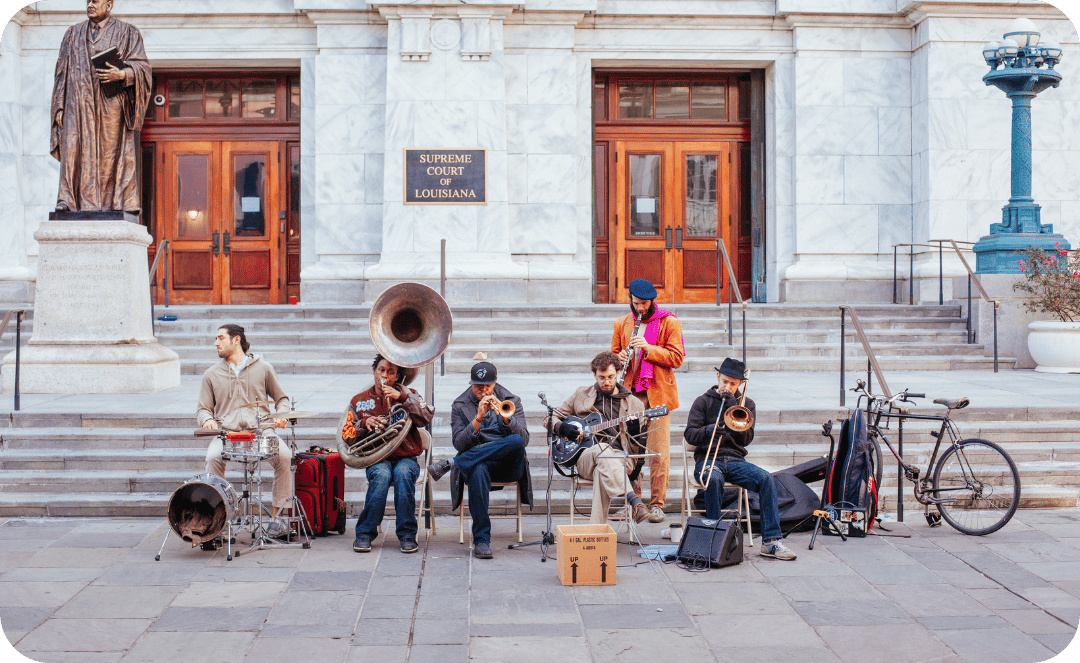
You'll also encounter tarot card readers, musicians, living statues, and performers who transform the square into an open-air theater. The corner spots are prime real estate, often occupied by the most established artists. This creative energy makes Jackson Square feel alive in a way few historic sites can match.
The artists typically set up shop daily, weather permitting, so you can browse original artwork while soaking in the atmosphere. Many visitors find their favorite New Orleans souvenir here—a painting or photograph that captures the city's essence better than any mass-produced item ever could.
Visit the Louisiana State Museum
The Louisiana State Museum operates multiple historic buildings around Jackson Square, including spaces within the Pontalba Buildings and the Cabildo and Presbytère flanking the cathedral. These museums offer deep dives into Louisiana's complex history, from colonial times through the Civil War and beyond.
The Cabildo, where the Louisiana Purchase was finalized, houses exhibits on the state's multicultural heritage. The Presbytère focuses on Mardi Gras and Hurricane Katrina, two forces that profoundly shaped New Orleans. Museum admission gives you access to thoughtfully curated collections that bring Louisiana's stories to life.
Plan at least an hour or two if you want to properly explore the museum offerings. The combination of location and content makes these among the most rewarding museums you'll visit.
Stroll Along the Moon Walk
Behind Jackson Square, between Decatur Street and the Mississippi River, you'll find the Moon Walk—a paved promenade named after former New Orleans mayor Moon Landrieu. This riverfront boardwalk offers unobstructed views of the mighty Mississippi River and the levee system that protects the city.
The Moon Walk is perfect for morning coffee, sunset watching, or simply taking a breather from the crowded square. You'll see riverboats churning past, barges hauling cargo, and maybe even a container ship heading to or from the Port of New Orleans. The river's constant movement reminds you that New Orleans has always been a working port city, not just a tourist destination.
Benches line the walkway, making it easy to sit and watch the river flow. It's a meditative experience that contrasts beautifully with the energy of the square just steps away.
Explore Nearby Attractions
Jackson Square sits at the center of a constellation of must-see New Orleans attractions. Café du Monde, the legendary beignet destination, is right there on Decatur Street—expect lines, but they move quickly, and those fresh beignets are worth the wait.
Jax Brewery, a former brewery converted into a shopping and entertainment complex, offers air-conditioned relief and Mississippi River views. The restaurants surrounding the square range from casual cafés to fine dining, giving you plenty of options for refueling between explorations.
When you're ready to venture beyond the square, you're perfectly positioned for exploring the French Quarter and discovering all the other incredible things to do in New Orleans. The square serves as your home base for French Quarter adventures.
When to Visit Jackson Square
Timing your visit can make a significant difference in your experience.
Best Times and Seasons
Jackson Square is open daily year-round, but the experience varies dramatically depending on when you go. Early mornings, especially in January and February, offer peaceful moments before the crowds arrive. The cool winter weather makes walking comfortable, and you'll have more space to appreciate the architecture and take photos.
October brings perfect weather—warm but not sweltering, with lower humidity than summer months. This is also when you might catch special events and festivals that take over the square.
French Quarter Fest, typically held in April, transforms Jackson Square into a massive outdoor concert venue. Multiple stages feature Louisiana musicians, and the entire French Quarter becomes one big celebration. If you love festivals and don't mind crowds, this is an incredible time to visit. If you prefer quieter exploration, avoid major festival weekends.
The square takes on different personalities throughout the day. Morning belongs to locals grabbing coffee and artists setting up their displays. Afternoon sees peak tourist crowds. Evening brings a romantic atmosphere as the cathedral and buildings light up against the darkening sky.
What to Expect as New Orleans Visitors
As Orleans visitors, you'll quickly notice that Jackson Square occupies a unique space where tourists and locals intersect. Unlike some tourist attractions that locals avoid, many New Orleans residents still frequent the square—they're grabbing beignets, cutting through on their way to work, or meeting friends by the famous statue.
That said, you will encounter crowds, especially during peak tourist seasons. The square is compact, and when cruise ships are in port or during major events, it can feel packed. Patience and good humor go a long way. If crowds bother you, time your visit for early morning or late evening when things calm down.
The French Quarter also means you'll encounter street performers asking for tips, vendors selling various items, and the occasional aggressive panhandler. A polite "no thank you" usually suffices. Most people here are simply trying to make a living through their art or services.
The History Behind the Name
Understanding how this space evolved from military parade ground to beloved public square adds depth to your visit.
From Place d'Armes to Jackson Square
The square's name change tells a quintessentially American story. When the Spanish controlled New Orleans, Place d'Armes served as a military drilling ground and public execution site—a far cry from today's family-friendly atmosphere. After the Louisiana Purchase in 1803, the square retained its Spanish name for decades.
The Battle of New Orleans in January 1815 made Andrew Jackson a national hero. General Andrew Jackson's victory over British forces at the war's end (ironically fought after the peace treaty was signed but before news reached Louisiana) cemented his legendary status. When locals decided to honor him, renaming the square seemed fitting.
President Andrew Jackson's equestrian statue, designed by sculptor Clark Mills, was erected in 1856. The dramatic statue shows Jackson tipping his hat, with his horse rearing on its hind legs—a technically difficult bronze casting that was considered an engineering marvel at the time. The inscription "The Union Must and Shall Be Preserved" was added during the Civil War when Union forces occupied New Orleans.
The Civil War left its mark on the square in other ways, too. Union General Benjamin Butler, who controlled occupied New Orleans, maintained the square as a symbol of federal authority. The construction and reconstruction that happened throughout the 1800s built the square into its current form, with each generation adding layers to its story.
The Parisian Influence
If Jackson Square reminds you of European plazas, there's a reason. The improved landscaping installed in the mid-1800s drew heavily from Parisian-style landscaping, creating a formal garden with symmetrical pathways and manicured greenery. This was intentional—New Orleans' Creole elite wanted their city to rival Paris in sophistication.
The original design featured simple diagonal paths, but later redesigns added the ornate iron fencing, gas lamps (later converted to electric), and carefully planned plantings. The result feels more French than American, which perfectly suits New Orleans' complex cultural identity.
The center of the square features that famous equestrian statue as the focal point, with palm trees and seasonal flowers providing color against the historic buildings. It's a design that's stood the test of time, proving that good urban planning creates spaces people want to use for generations.
Frequently Asked Questions
Is Jackson Square in New Orleans free to enter?
Yes, Jackson Square is completely free to visit and open to the public daily. You can walk through the park, admire the statue, and enjoy the atmosphere without paying anything. However, some surrounding attractions like the Louisiana State Museum and St. Louis Cathedral tours may charge admission fees.
Where can I find the best local artists at Jackson Square?
The local artists set up along the iron fence surrounding Jackson Square, particularly on the Chartres Street and Peter Street sides. They typically arrive in the morning and stay until evening, displaying original paintings, photographs, and drawings of New Orleans scenes. Each artist has their own distinct style, so take time to browse before making a purchase.
What restaurants are near Jackson Square?
Dozens of restaurants surround Jackson Square within a few blocks. Café du Monde is the most famous, serving beignets and coffee 24/7. The Pontalba Buildings house several dining options with balcony views of the square. For more extensive dining recommendations, check out where to eat in New Orleans to find options for every taste and budget.
Can I visit St. Louis Cathedral inside Jackson Square?
The Louis Cathedral welcomes visitors and is open daily for self-guided tours when services aren't in progress. The cathedral sits at the upriver side of Jackson Square, and entry is free, though donations are appreciated. The interior features beautiful architecture, religious artwork, and historic details worth seeing, even if you're not religious.
When was the Andrew Jackson statue erected at Jackson Square?
The statue of Andrew Jackson was erected in 1856, designed by sculptor Clark Mills. It depicts General Andrew Jackson on a rearing horse, commemorating his victory at the Battle of New Orleans in January 1815. The statue became controversial during recent years due to Andrew Jackson's history, but it remains a central landmark and gathering point in the square.
How do I get to the Moon Walk from Jackson Square?
The Moon Walk is directly behind Jackson Square, accessible by walking through the square toward the Mississippi River or by heading down Decatur Street. The paved riverfront promenade runs along the levee, offering views of the river and downtown New Orleans. It's an easy walk from anywhere in the square and provides a quieter spot to relax away from the crowds.