The history of the French Quarter stretches back over three centuries, weaving together tales of French settlers, Spanish rule, and American transformation into the vibrant cultural heart of New Orleans we know today. This oldest neighborhood in the City of New Orleans stands as a testament to the rich history that shaped Louisiana and the entire Mississippi River region.
TLDR
• The French Quarter's history spans over 300 years, from French colonial origins in 1718 through Spanish rule to American development post-Louisiana Purchase
• Iconic architecture combines French colonial foundations with Spanish colonial rebuilding and 19th-century cast iron galleries
• Jackson Square and St. Louis Cathedral remain the cultural heart, surrounded by historic streets like Royal Street and Bourbon Street
• The Vieux Carré Commission protects the Quarter's historic character while allowing modern amenities and tourism development
Ready to Experience French Quarter History Firsthand?
Now that you understand the fascinating history of the French Quarter, why not experience it yourself? Stay in the heart of this historic neighborhood and walk the same streets where French settlers, Spanish colonists, and American pioneers shaped New Orleans culture. Roami offers exceptional accommodations that let you immerse yourself in the Quarter's rich heritage while enjoying modern comfort and convenience.
Book your stay in New Orleans and become part of the ongoing story of America's most historic neighborhood.
Early History and Colonial Foundations of New Orleans
.png)
French Settlers and the Birth of the French Quarter
The early history of what would become the French Quarter began in 1718 when French engineers, led by Jean-Baptiste Le Moyne de Bienville, established New Orleans along the Mississippi River. These French settlers chose this strategic location near Lake Pontchartrain for its prime position controlling river traffic between the Gulf of Mexico and the vast Louisiana Territory.
The original city plan, designed by French engineers, created the distinctive grid pattern we see today, bounded by Canal Street, North Rampart Street, Esplanade Avenue, and the Mississippi River. The French royalty had grand visions for this new settlement, naming it after Philippe II, Duke of Orléans. The central square, now known as Jackson Square, served as the heart of colonial life, surrounded by government buildings and what would later become the Louis Cathedral.
Spanish Rule and Spanish Colonial Architecture
In 1762, France secretly transferred Louisiana to Spain, ushering in a period of Spanish rule that would dramatically influence the Quarter's architectural character. The Spanish colonial architecture we admire today largely replaced the original French structures after devastating fires in 1788 and 1794.
Spanish authorities rebuilt the Quarter with brick-between-posts construction, creating the iconic buildings with their characteristic cast iron galleries and iron galleries adorning the ground floors. This architectural evolution gave birth to the distinctive Creole cottages and large houses that line Royal Street, Decatur Street, and other historic thoroughfares. You can explore the charming Royal Street to see these architectural gems firsthand.
The Louisiana Purchase and American Transformation
How Americans Began Shaping the Quarter
The Louisiana Purchase of 1803 marked a pivotal moment when the Orleans area officially became part of the United States. This transition brought significant changes as Americans began to establish themselves in the region. The American Sector developed upriver from Canal Street, creating a distinct separation between the old Creole sections and the new American commercial district.
The Central Business District emerged as Americans established new hotels, banks, and commercial enterprises. This period saw the Quarter's character evolve from a purely colonial settlement to a cosmopolitan urban center that balanced old-world charm with American enterprise.
Andrew Jackson and the Battle of New Orleans
Andrew Jackson's victory at the Battle of New Orleans in 1815 elevated the city's status and cemented its importance in American history. The central square was later renamed Jackson Square in his honor, with the iconic equestrian statue becoming a focal point for both residents and visitors seeking to discover amazing things to do in New Orleans.
19th Century Growth and Cultural Development

Creole Culture and French Creoles in the Quarter
The nineteenth century witnessed the flourishing of Creole culture as French Creoles, Spanish descendants, and other ethnic groups created a unique cultural blend. This period saw the emergence of distinctive traditions that would define New Orleans identity, from culinary innovations to musical developments that would eventually birth jazz.
The Quarter's population during this era was incredibly diverse, with Catholic Saints' feast days becoming major celebrations that brought together various communities. Living quarters ranged from elegant mansions to more modest rooming houses, creating a vibrant social tapestry.
Cast Iron Galleries and Colonial Architecture Evolution
The famous cast iron galleries that grace many French Quarter buildings were largely added during the nineteenth century. These decorative iron galleries, often called "cast iron lace," were manufactured in foundries and added to existing colonial architecture, creating the distinctive look we associate with New Orleans today.
The architectural evolution continued throughout the twentieth century as preservation efforts began protecting the Quarter's historic character while allowing for careful modernization.
Key Landmarks and Historic Sites Through the Ages
Jackson Square and Louis Cathedral as the Heart
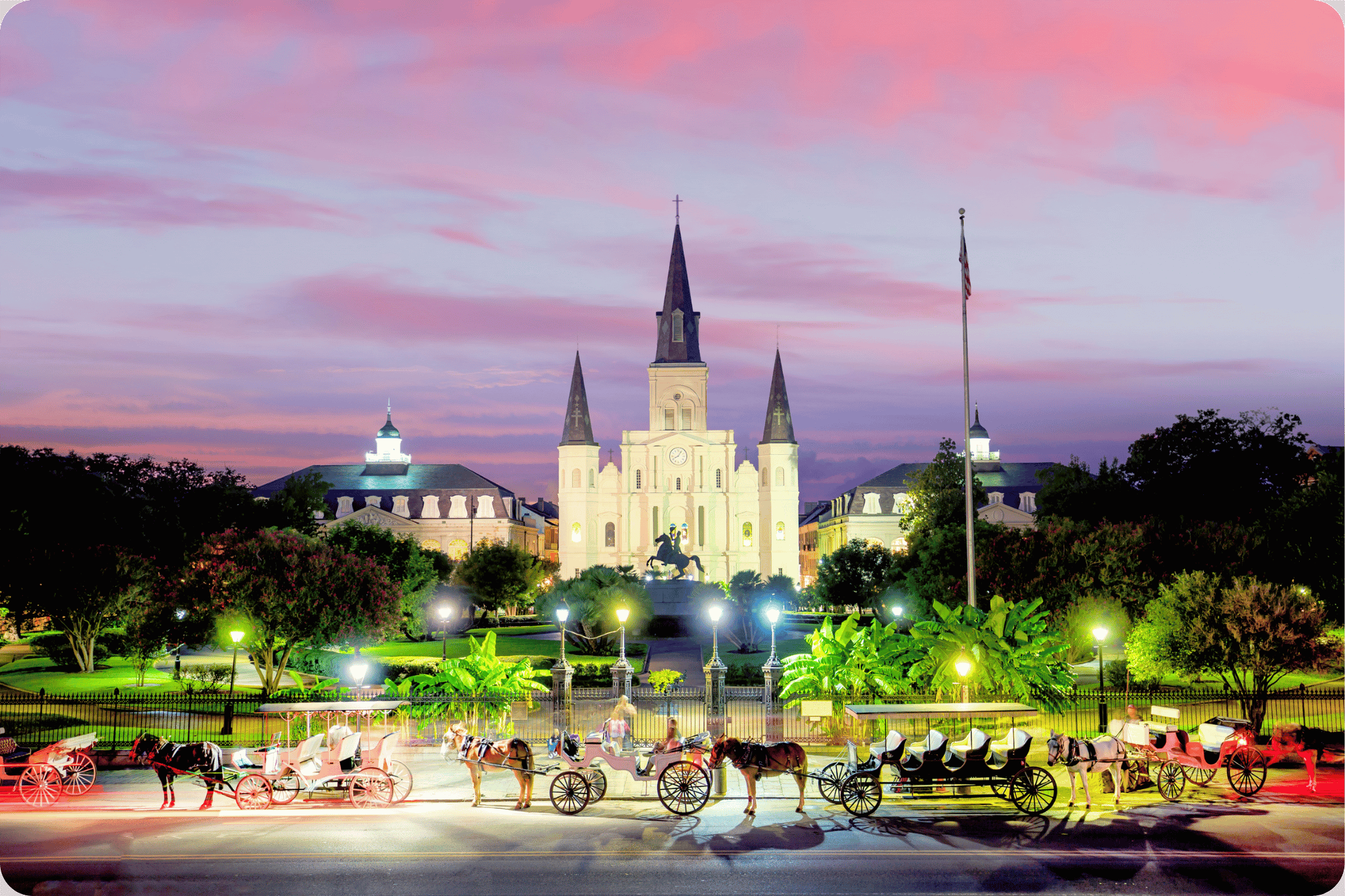
Jackson Square, originally called the Old Square, has remained the spiritual and cultural center of the French Quarter throughout its history. The St. Louis Cathedral, rebuilt multiple times since the original French structure, dominates the square's landscape and represents the enduring influence of Catholic Saints in New Orleans culture.
The Pontalba Buildings flanking the square represent some of the finest examples of 1840s architecture in America, with their distinctive red brick and cast iron galleries creating an elegant backdrop for the square's activities.
Royal Street, Bourbon Street, and Canal Street Development
Each major street in the Quarter developed its own character over the centuries. Canal Street became the boundary between the French Quarter and the American Sector, while Royal Street evolved into an elegant shopping destination filled with art galleries and antique shops.
Experience the vibrant Bourbon Street, which transformed from a residential street into the entertainment district famous worldwide. The street's evolution reflects the Quarter's ability to adapt while maintaining its historic essence.
Pontalba Buildings and Government Buildings
The Pontalba Buildings, constructed in the 1840s, were among America's first apartment buildings and represented a revolutionary approach to urban living. These structures, along with other government buildings around Jackson Square, established the architectural standards that would influence Quarter development for generations.
Historic sites throughout the Quarter tell the story of New Orleans' evolution through various periods, from colonial rule through the Civil War and beyond.
The French Quarter Today: Modern Life in a Historic Setting
Art Galleries, Jazz Clubs, and Antique Shops
Today's French Quarter maintains its historic character while embracing modern cultural expressions. Art galleries showcase both traditional and contemporary works, while jazz clubs continue the musical traditions that began with legends like Louis Armstrong. Antique shops offer treasures that span centuries of New Orleans history.
The Quarter successfully balances preservation with tourism, ensuring that residents and visitors alike can experience authentic New Orleans culture in settings that have witnessed over 300 years of history.
Mardi Gras and Cultural Celebrations
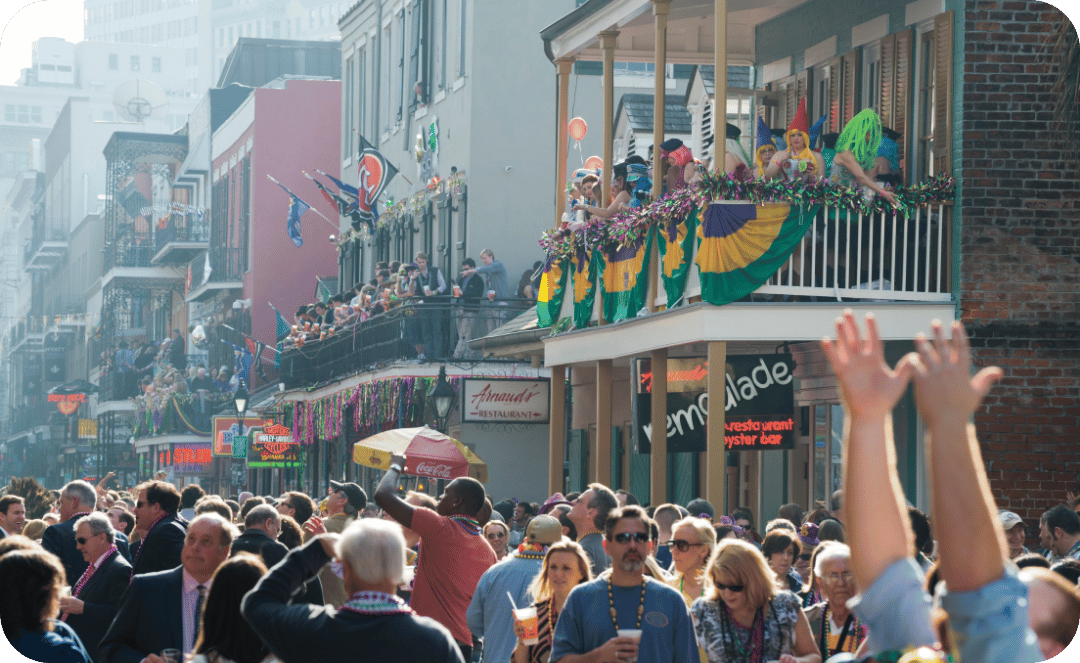
The French Quarter serves as the epicenter for Mardi Gras celebrations in New Orleans, continuing traditions that date back to the colonial period. These celebrations showcase the cultural fusion that defines New Orleans, bringing together influences from French, Spanish, African, and American traditions.
Modern celebrations honor the Quarter's history while creating new traditions for future generations to enjoy.
Preserving the Rich History: The Vieux Carré Commission
Established in 1936, the Vieux Carré Commission serves as the guardian of the French Quarter's architectural and cultural integrity. This organization ensures that the Quarter's historic character remains intact while allowing for appropriate modernization and growth.
The commission's work has been particularly crucial in recovery efforts following challenges like Hurricane Katrina, ensuring that restoration work respects the Quarter's historic character while meeting modern safety and comfort standards.
Whether you're planning to learn more about the French Quarter or visit the beautiful Garden District, understanding this rich history enhances any New Orleans experience.
Frequently Asked Questions
How did the Louisiana Purchase affect the French Quarter's development?
The Louisiana Purchase of 1803 brought American influence to the Orleans area, leading to significant changes in commerce, governance, and cultural dynamics. The Louisiana Constitution established new legal frameworks, while Baton Rouge became the state capital, shifting some political focus away from New Orleans while the Quarter remained the cultural heart.
What role did Bayou St. and other lesser-known streets play in Quarter life?
Streets like Bayou St., Philip Streets, and Iberville Street served as vital residential and commercial arteries for the Quarter's diverse population. These areas often housed working-class residents in rooming houses and smaller dwellings, contributing to the neighborhood's authentic character away from the main tourist corridors.
How has the Quarter's population changed throughout its informal history?
The Quarter's population has fluctuated dramatically throughout its informal history, from the original French settlers through periods of Spanish rule, American immigration, and modern tourism development. Yellow fever epidemics in the 19th century significantly impacted population numbers, while modern preservation efforts have balanced residential needs with tourism demands.
What impact did Hurricane Katrina have on French Quarter preservation efforts?
Hurricane Katrina tested the Quarter's resilience, but the historic area fared better than many parts of New Orleans. The disaster accelerated preservation discussions and led to stricter building codes while maintaining historic integrity. Recovery efforts emphasized the importance of the Vieux Carré Commission in protecting the Quarter's character.
How do new hotels and modern amenities fit into the historic French Quarter?
New hotels in the Quarter must comply with strict preservation guidelines set by the Vieux Carré Commission. Modern amenities are carefully integrated into historic structures, ensuring that contemporary comfort doesn't compromise the area's authentic colonial and 19th-century architecture.
What does "commonly called" the Vieux Carré mean and why is this term significant?
"Vieux Carré," commonly called the Old Square in English, is the French name for the French Quarter that emphasizes its role as the original city center. This term reflects the area's French origins and is commonly called upon in official preservation documents and cultural discussions to honor the Quarter's authentic heritage.